
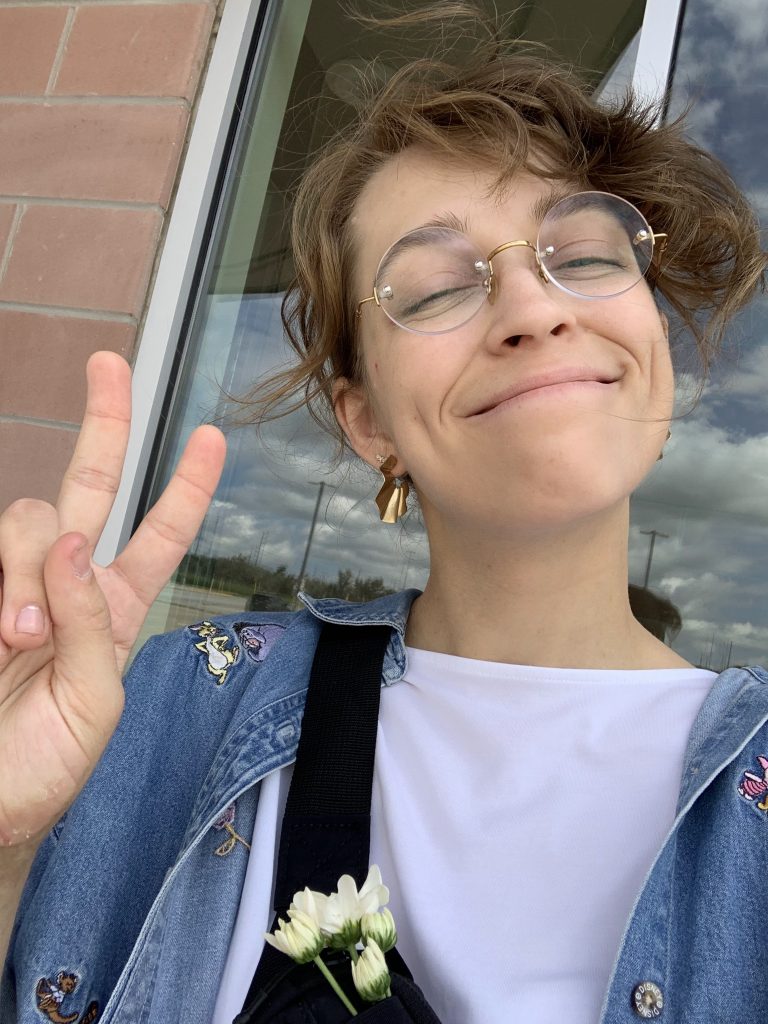
Jasmine Frost worked as the Renovations Assistant at 75 Blake St. during the summer of 2026. She is currently pursuing a Masters of Theological Studies at Wycliffe University.
I was a stranger to Act Five prior to March of this year. A perpetual student, moving from one MA in philosophy to another in theology, I happened across the summer job posting for a Renovations Assistant. Up to this point, I had been job hunting in Toronto for months to no avail, and my laptop was dangerously close to being hurled across the room at any given moment. But when I learned that Act Five’s vision of being “embodied in place” corresponded with what I had already been planning to research in the Fall, and I got to know the hearts of the staff during the hiring process, I became quietly grateful that God had frustrated my earlier efforts.
I moved into my role ready to ask this wise and wonderful team all sorts of questions during my short time with them, and I anticipated with eagerness the new paradigms and resources I would most certainly come away with (academics compulsively collect such things). And, at the end of this summer of wood and weeds and sandpaper and spraybottles, I am: I have a stack of freshly-penned sticky note quotes and a whole new reading list to pour over from these brilliant individuals I now get to call my friends. But, much to my surprise, these hoarded words did not seem to be the cause of the quiet and hopeful stirring that accompanied me during my time at 75 Blake Street. There was something fresh and mysterious in this place…something that left an impression of deep goodness that my acquisition of aphorisms could not account for.
It wasn’t until a few days ago that I could put words to that fresh and mysterious thing. On August 31st, Wendell Berry died. I have read much less of his work than I’d like to admit, but I have often found myself returning – as I did this week – to his short but provocative poem, “Manifesto: the Mad Farmer Liberation Front”. Its last imperative is, incidentally, an Act Five pillar: “Practice resurrection.” That was it – for the first time in my life, I had been surrounded by people living in a way that consistently sought and presupposed the possibility of life, and perhaps even flourishing, where there was (or could be) death.
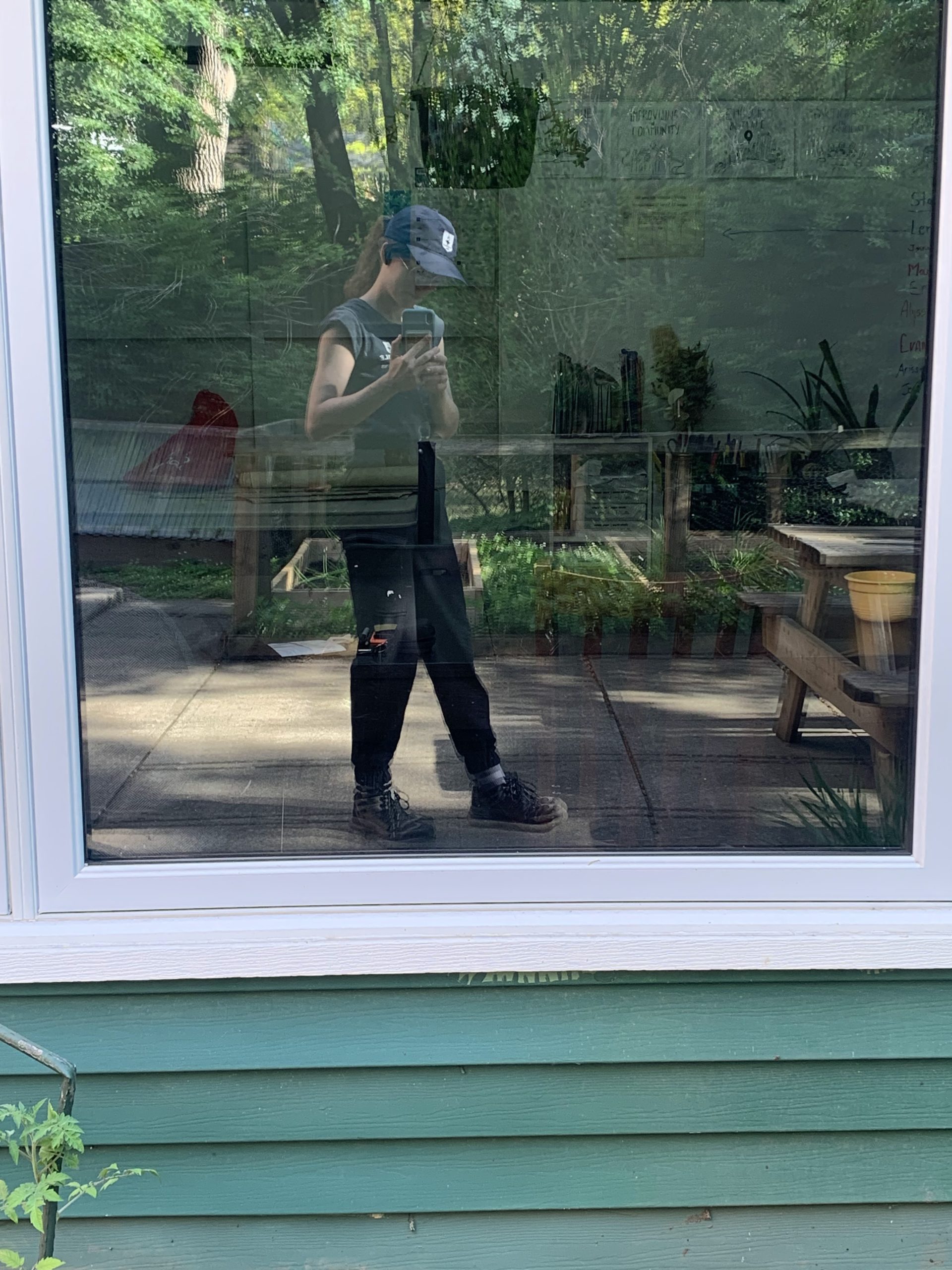
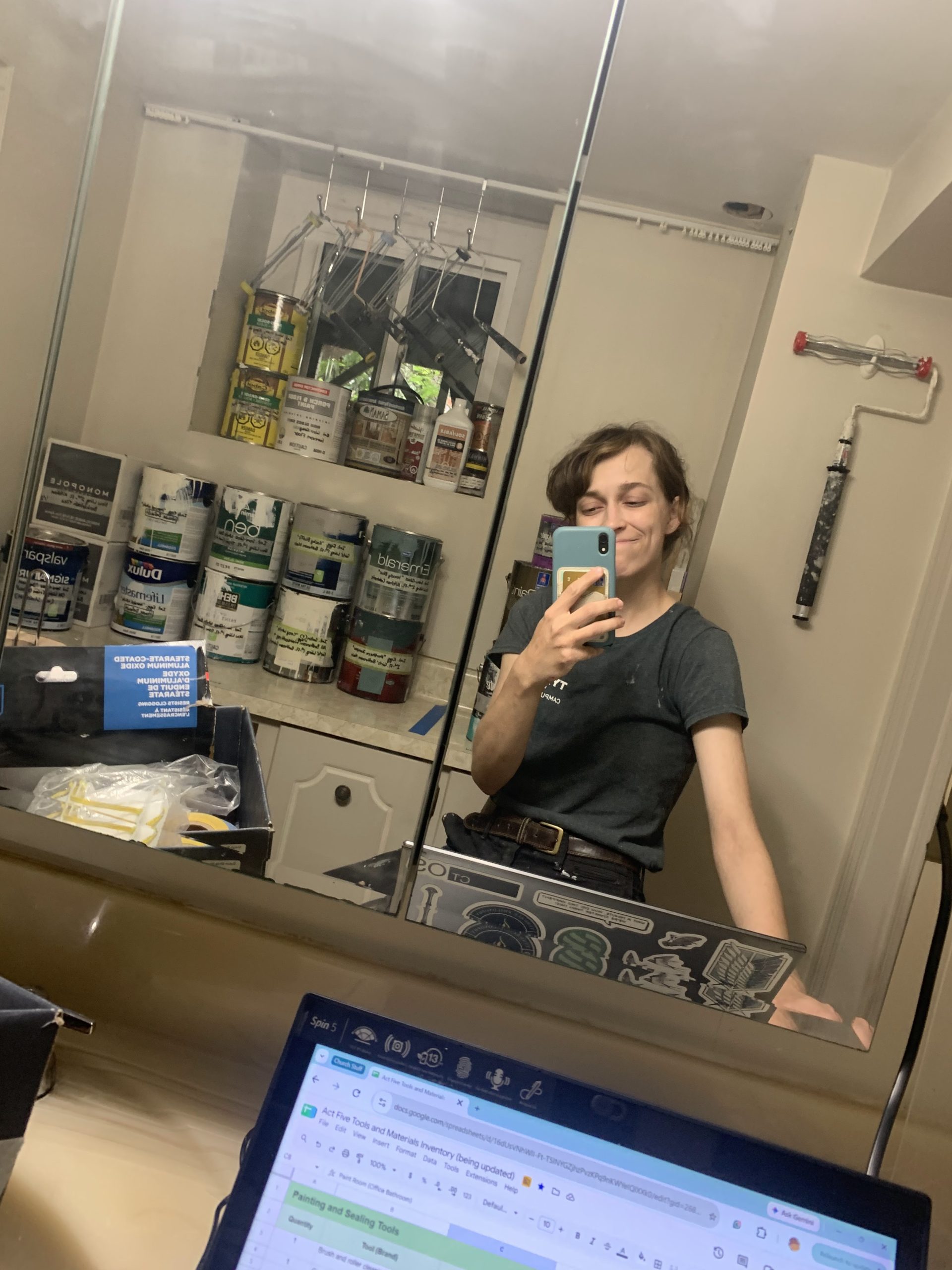
It seems to me that this practice of resurrection took at least three forms in the Act Five community. The first was the almost totally habituated commitment of thought and time to the service of populations and plots of land that many would be tempted to forsake: those struggling with addiction or homelessness, community gardens rendered innert by industrial polution, streets whose reputation frightens away investment. Nearly everyone seemed to keep at least one finger on the pulse of the individuals serving these people and places, and to be ready to mention their needs to those who might be able to meet them. These were not automatically regarded as fruitless endeavours, as states of affairs always and only to be grieved.
The second form, perhaps less obvious, was the culture of giving and borrowing within the community. Throughout the summer, I either witnessed or benefitted from the borrowing of a van, a mitre saw, a french press, books, a folding table, and a canoe, among other things. What surprised me the most, though, is that it wasn’t unusual for these exchanges to occur between members of the community who had had only limited interaction with each other before that point. Suspicion and reticence are so often the default posture we are encouraged to have towards even the semi-stranger; this shared willingness to regularly risk disappointment or loss resurrected the possibility of trust within a community of people who don’t all necessarily have existing relationships with each other and who must place trust in the judgement of their peers.
The third form was the culture of invitation – I was constantly being beckoned to share in events, meals, favourite spots in the city. The very act of inviting both presupposes and promises a future: it says to the other, “I am convinced that this thing has enough life, or potential for life, left in it to stake not only my own participation on it, but yours also, so that we might share the delight of that life when we find/co-create it.” From all of these arises a way of being in the world that gently and graciously rejects narratives of terminality.
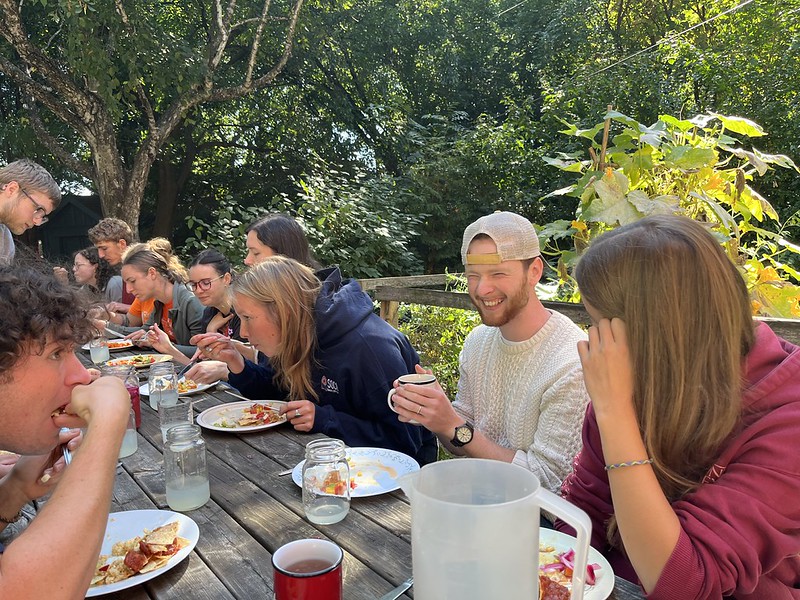
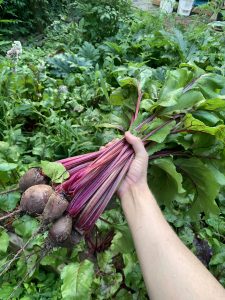
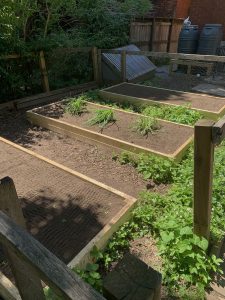
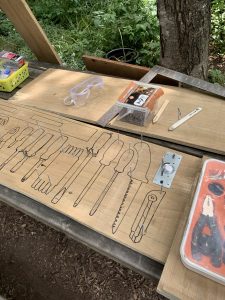
I, too, was given an opportunity to practice resurrection: I was restoring antique brass doorknobs that had been repeatedly painted over, building new garden beds to take up the mantle of the old ones, etc. But, I had quietly regarded many other deaths as final: for example, the death of the hope of forming a sense of community in my suburban neighbourhood, where arterial streets that stretch on into the horizon generate walls of sound and speed that repel conversation, that send even friendly pedestrians endlessly in opposite directions. The death of our church garden. The death of meaningful career prospects. Are they really, after all my grief, “only asleep”? I suppose that practicing resurrection – practicing both in the sense of inhabiting it beyond contemplation, and of trying again and anew after failure – is the best way to find out. And I thank God that I’m not doing it alone.

Keep Exploring
Discover Act Five’s Gap Year and Residency Programs, join our community events or learn more about our mission and vision.
Act Five exists because of the generosity of people who believe in forming young adults for lives of purpose and service. Make a one-time gift or become a monthly supporter.