Act Five’s The Six Acts: Biblical Foundations course explores the Bible as a story from creation to revelation, where students learn to read scripture the way Jesus did. Students learn to see God’s character in the story and wrestle with their own place in the narrative. Students explore each section of the Biblical story, learn how to read scripture the way Jesus did and develop a view of the whole unfolding narrative of scripture in order to encounter God and scripture in new ways.
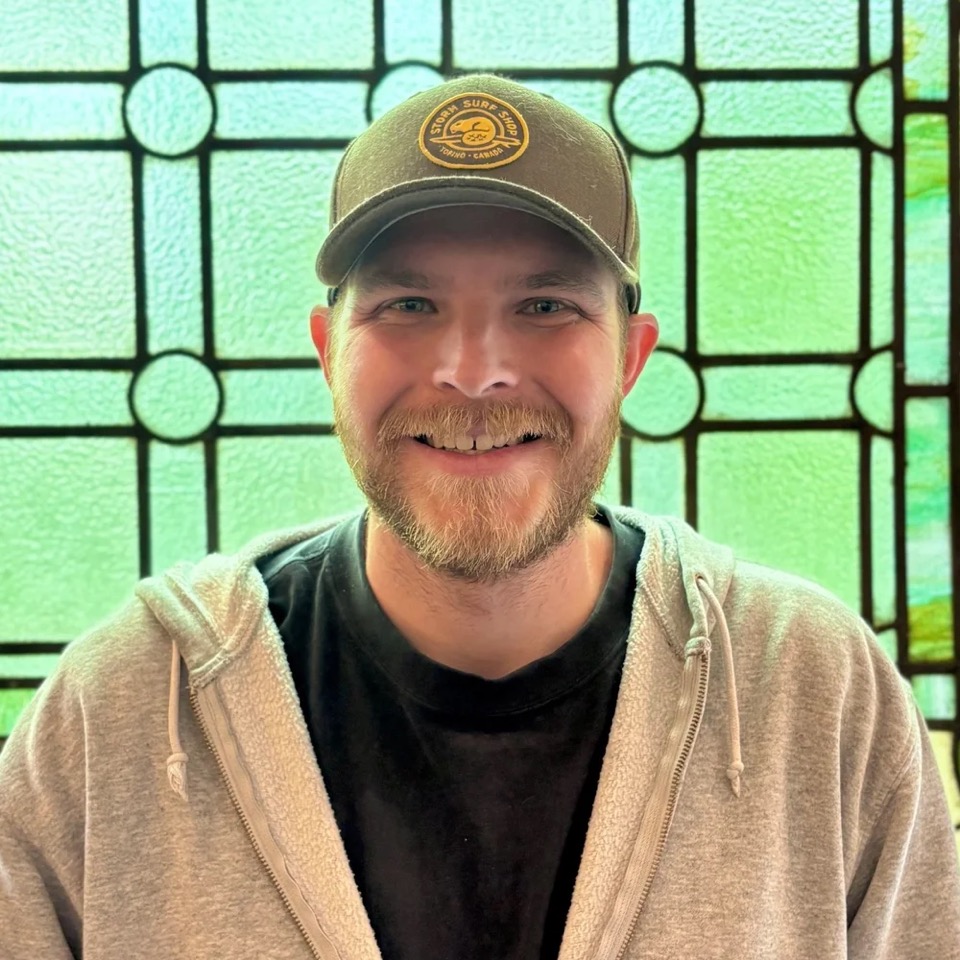
Jackson Theune, pastor of Philpott Church, has been involved in teaching Six Acts for the last three years, and here he offers a reflection on the class.
Who Cares?
Near the beginning of almost every class of The Six Acts course, just before we engage with Scripture, we ask ourselves a short but difficult question: who cares? In other words, who cares about the stories of Adam and Eve or the Exodus? Or about the history of Israel’s kings and judges? Who cares about the vivid imagery in the Psalms or the apocalyptic warnings of the prophets? Who cares about the Gospels or the letters to ancient churches? Why do these texts matter and what’s the point in engaging with them? Do they actually make a difference in how we live today?
While we often find ourselves in deep conversation about the answers to these
questions, we basically always end up in the same place. More accurately, we end up at
the feet of the same person, Jesus of Nazareth. It’s clear that, for Jesus, God’s word is
more than just a collection of literature – it actually matters and helps us live in a way,
both as individuals and as a community, that experiences the goodness and presence
of God. As Jesus said during his temptation in the desert, quoting from Deuteronomy 8,
“Man shall not live on bread alone, but on every word that comes from the mouth of
God.”
Acting, THinking and Living Like Jesus
Although Jesus treasured and refused to let any part of God’s word fall to the wayside
(see Matthew 5:17-18), we also see that, for Jesus, Scripture is not an end in itself.
Rather, God’s word captured in the written text of our Bibles is a means to the end who
is the Word incarnate. As Jesus said to the religious leaders in John 5, “You study the
Scriptures diligently because you think that in them you have eternal life. These are the
very Scriptures that testify about me, yet you refuse to come to me to have life.” In other
words, when we study God’s word, the answer to the question “who cares?” is found in
the person of Jesus. For the students in The Six Acts course, this is the guiding principle
behind all we do.
As we engage with the “Six Acts” of Scripture, a paradigm made famous by the scholar
and theologian N.T. Wright, we are constantly asking ourselves how this text not only
points us to the person of Jesus but also how his own Spirit, the Spirit of Christ, helps
us engage with these texts. In our study of them, are we becoming more like Jesus? Is
the book of Joshua making us more loving? How is the prophet Micah helping us experience
the fullness of life Jesus offers? Is Paul’s letter to the Ephesians helping us become the
kind of community Jesus wants us to be?
All along the way, as we engage with the cultural, literary, and theological context, we are seeking to be transformed more and more into the image of Christ. As we do, we find that God’s written word works not only to change us as individuals but also our communities. As I often remind our students, the Bible is concerned with “divine communal formation.” In other words, it is concerned with forming a kind of community that looks, acts, thinks, and lives like Jesus – the Son of God.
Finding True Life
By the end of our course together the hope is obviously that our students would be able
to engage more authentically with the text of Scripture. Whether that is through a
broader knowledge of the historical context, an appreciation and ability to engage with
the original languages, or a deeper understanding of the “Big Story” being told
throughout the entire Bible, the goal is to set students on a journey of discovery and
curiosity.
However, the goal is not engagement for engagement’s sake. Reading the
Bible is good and studying it is important, but where do we find our true life? Are we
saved by the words on the page, or do they point us and help us know more intimately
the true giver of life, Jesus Christ? My prayer is that the Act Five students will come to
know Jesus more fully as a result of our study together and that their lives become a
fuller reflection of who he is as a result. After all, if our engagement with God’s word
doesn’t lead to the Word himself, then who cares?
Keep Exploring
Discover Act Five’s Gap Year and Residency Programs, join our community events or learn more about our mission and vision.
Act Five exists because of the generosity of people who believe in forming young adults for lives of purpose and service. Make a one-time gift or become a monthly supporter.