
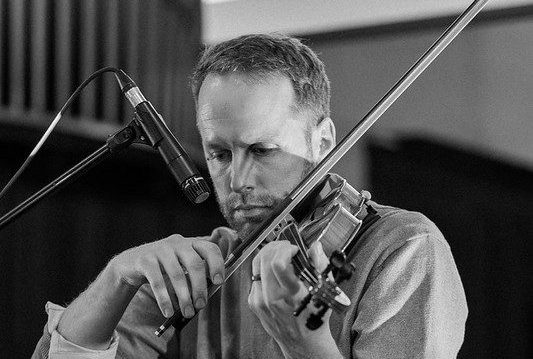
In 2018, Jon moved to Hamilton to develop and launch Act Five. He lives here with his wife, Aimee, and their three young children, growing to love this place and be loved by the community here. For eight years, Jon has learned alongside all the young people who have come through this place as they have adventured through wild spaces, shared meals with neighbours, and imagined the fullness of life together. Jon is grateful and excited to see what God has in store for Act Five in the years to come – to see more students, residents, and our broader communities inspired by what is happening here.
Jon was the first speaker in Act Five’s 2026 Winter Learning Series.
Stories To Begin the 2026 Winter Learning Series
Be wary of making heroes of humans.
We are walking a dangerous road when we turn the real, earthy, honest lives of those we celebrate, whether living or dead, into “pinnacle” forms of the Christian life. When we do this we risk misplacing our hope onto versions of what it means to be human that are less than the reality of what it means to be human.
We see these stories play out all the time. Modern day heroes live in front of crowds as reduced archetypes of what we believe we need or want, showing us lives that are celebrated as good, faithful, “impactful”. Either an inevitable story of moral failure comes that seemingly necessitates his or her followers to either cancel the leader or justify the failure; or this point does not come and we are permitted to continue elevating a less-than-human form of the hero.
The problem here is beyond what this requires of the individual and what it does to his or her soul and story – though this too matters a great deal. The wider problem is what it is doing to our imaginations, shaping our expectations of the life we are meant to live. The mess of real life becomes a problem to be solved (or ignored) if the goal becomes some clean and shiny ideal. This in turn costs us our own humanness, our ability to live well together within communities and our ability to love and be loved.
If this is what the good life should look like, then the mess of my own life, the mess of others around me, and the uncontrollable ways of God and his grace become unacceptable.
In light of this, as I presented on the Clapham community and Arvo Pärt to open the 2026 Winter Learning Series, I feel the need to protect both of these stories from being heard and processed through the default lens of reducing them into flattened heroes.
Perhaps some of this is semantics. If we are to use the word “hero”, then heroes must be allowed to have mixed motives and blind spots, those who likely left wounds amidst the good of their story. All of us are the same, more collections of fragments than the kind of congruent whole people we wish we were.
After all this pretext… I loved getting to talk about the two stories I chose to open our learning series this past year. I entered these stories as a learner seeking to invite others along the way with me.
The Clapham Community
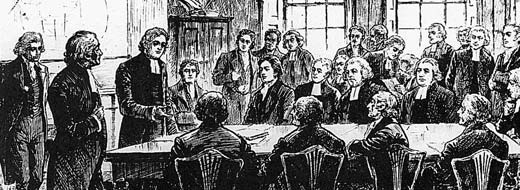
I was first inspired by the 18th/19th Century’s Clapham community (or Sect) from a high school history teacher and colleague of mine. His name is Harvey and he is one of the best history teachers I know. I heard him speak of this community and was captivated.
This community that included William Wilberforce, Hannah More and many others each encountered God in moments of deep personal transformation. They saw their positions of influence as opportunity and collectively fostered a deep and wide vision that held everything from moral reform to missional fervour to their own sanctification. They imagined rivers of justice flowing among the poor, slave, woman, child, sick, prisoner and beast. Over decades of hard work, they shaped paths of education, used the arts to shape culture, and they patiently worked to change policy at the highest levels of government.
The Clapham community was way ahead of its time, working out all they did and who they were in embodied community. They quite literally changed the world as they abolished the slave trade, started what became the seeds of free public education, reformed healthcare systems and modes of global missions against the harm of colonial bulldozing , and even started the SPCA.
I mean, if there are to be heroes, this is it.
They of course were also flawed. They enjoyed their wealth. They experienced division in their community. They were far more for the poor than they were alongside the poor. They had harsh words for folks who sounded too revolutionary. The more you dig, the more human they become. I’m grateful for this because it means I too might be welcome at their table.
Their story matters. They tried with some real chutzpah, they gave their life to the causes the prophets and Jesus appear to take seriously, and they did so in no small part because of their communities that held them. They were humble in their daily need for a deep and real grace.
I invite you to learn more of their story. You can find good books on Hannah More and William Wilberforce among other key members of the Clapham community.
Heroes or not, this community challenges and inspires me, leaving me with questions, hope and conviction.
Arvo Pärt
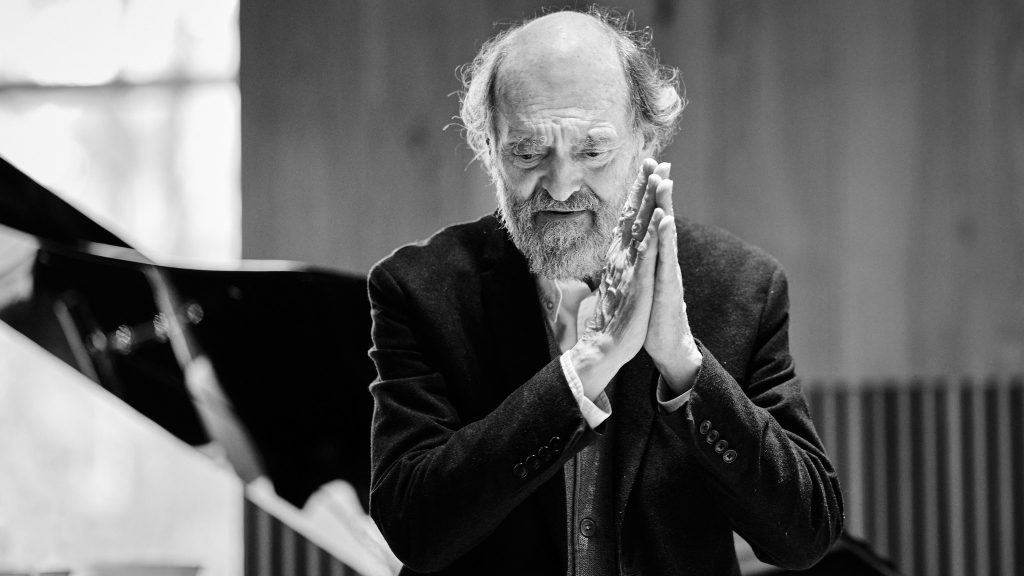
Arvo Pärt is about as close as someone can come to being a hero of mine. I had been captivated by him since he was introduced to me by my partner, Aimee, herself a brilliant musician, psychotherapist, learner and one who sees the possibilities for the arts to shape and heal our world.
Pärt is an Estonian composer of the 20th & 21st Centuries who experienced both the Nazi and Soviet regimes of oppression on his people and his family, and whose story of transformation is encountered in watching how his music changed over time. He wrote with powerful conviction that gave voice to the gospel of a suffering God in the face of Soviet censorship.
Central to his story, he found himself in an 8 year season where he encountered the depths of darkness; there, eventually, he discovered a light at the very heart of the deepest dark, where he was found by the simplest and truest form of love that transformed him. After assuming he would never write compose again, he now returned to something new in his music – cruciform in shape and gentle in the face of the full force of empire. His story is powerful and his music is even more so.
I sought to tell a piece of his story and play a piece of his later music. The recording of our piece is available for you to watch & hear; it is what it is. What I would encourage is for you to listen to the story via our podcast and then take a minute to listen to a proper recording of Spiegel Im Spiegel if you have the capacity to do so.
In some ways, this piece and Pärt’s story is a truer kind of heroism we perhaps can allow to shape our imaginations. It is the way that is low, encountering God in the dark, instead of versions of heroes that can wow a crowd and make us feel like we are winning some war we were never meant to be fighting as Christians. The piece, Spiegel Im Spiegel, can hardly be received without it moving our hearts to find rest in God while forming our loves more deeply toward our neighbour.
Whether we use the language of hero or not, I invite us to consider what we imagine when we picture the faithful life or a life worth telling through story. My hope in offering these two stories was, and is, to move the conversation in a fruitful direction.
Thanks for reading.
We hope you’ll continue following the conversations shaping life at Act Five. New reflections and stories are published regularly, and we’ll be sharing more reflections from this year’s Winter Learning Series speakers in the weeks ahead.
Keep Exploring!
Discover Act Five’s Gap Year and Residency Programs, join our community events or learn more about our mission and vision.
Act Five exists because of the generosity of people who believe in forming young adults for lives of purpose and service. Make a one-time gift or become a monthly supporter.