
A Wise Imagination
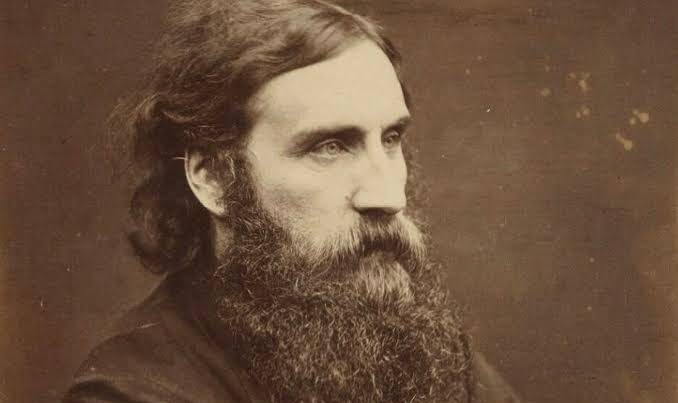
“A wise imagination is the presence of the Spirit of God,” writes George MacDonald—the man C.S. Lewis called his “Master,” as both literary guide and spiritual mentor. He is also the man who, in 1873, responded to a petition from Hamiltonians and added this city to his renowned North American lecture tour.
It’s important to note that MacDonald writes here of a wise imagination. He knew well that the imagination can be lazy, flaccid, uninformed, selfish, or corrupt. And so he invites us to contemplate placing our imaginative abilities into participation with, and under the tutelage of, the Holy Spirit. And then, to anticipate what might thus unfold.
Re-Storied People
MacDonald thought deeply about imagination throughout his life. The only lecture he ever published and repeatedly delivered was a shortened version of his seminal essay, “The Imagination: Its Functions & Its Culture.” If you are familiar with Chesterton’s chapter “Ethics in Elfland” in Orthodoxy, Tolkien’s essay “On Fairy-Stories,” Lewis’s essay “On Stories,” or even Barfield’s Poetic Diction, reading MacDonald’s essay can be startling. Many of the ideas later developed by these writers appear here first, in this essay and in the companion essay that follows it in A Dish of Orts: “Individual Development.”
MacDonald deeply believed that we are created in the image of an imaginative God. So the more deeply we are re-storied – as Christians are continually called and even commanded to be, from the Shema to Elijah, from Christ on the road to Emmaus to the countless faith-shaped voices who have followed – the healthier, more productive and more Christologically revolutionary our Imaginations will be. We are storied in and through our relationships with other humans, our communities and by the non-human creations of the Creator as well.
As MacDonald writes:
“But while the imagination of man
has thus the divine function of putting thought into form,
it has a duty altogether human,
which is paramount to that function—
the duty, namely, which springs from his immediate relation to the Father,
that of following and finding out
the divine imagination in whose image it was made.
To do this,
the man must watch its signs, its manifestations.
He must contemplate what the Hebrew poets call
the works of His hands.”
MacDonald pushed back against the polarization of Reason from Imagination. To him, they were two sides of the same holy coin: inseparable, mutually dependent, and diminished when isolated from one another. “Poetry is true as Science, and Science is holy as Poetry,” he wrote as a lover of both. Through his entire work he demonstrates how each depends upon the other, and how an imbalance of either’s voice can be dangerous.
Always he is turning our attention back to the One who imagined both us and all of creation into existence:
“[The imagination is]
made in the image of the imagination of God.
Everything of man must have been of God first;
and it will help much towards our understanding of the imagination
and its functions in man
if we first succeed in regarding aright the imagination of God,
in which the imagination of man lives and moves and has its being.”
Compelling Goodness
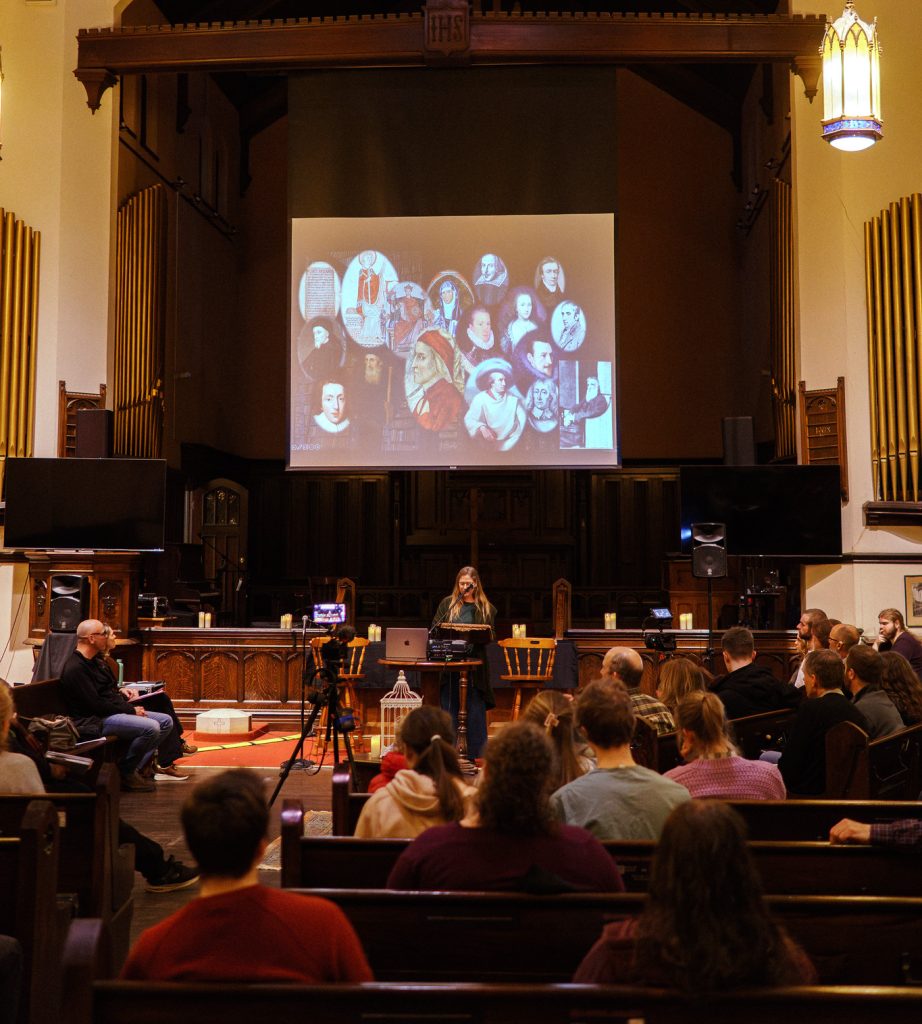
Lewis, Chesterton, and many others observed that MacDonald possessed a rare gift: he could make Goodness deeply compelling. But MacDonald would argue that he can do this because he engages with the imaginative conversations – the stories and art – of the ‘Clouds of Witnesses’ in our history that have sought to these imaginative conversations. He brought his own voice and experiences into that conversation, engaging in an antiphony of worship, and out of this, imaginatively new Goodnesses have been brought forth.
When editing an anthology of such writers, MacDonald described himself as a “Master of the Hearing.” He wanted readers not merely to encounter individual voices, but to hear the beautiful antiphony that arises when lovers of God’s Story respond not only to the Gospel as found in the original texts, but respond to the responses, sounding out even more beautifully for the joint participation:
“No man could sing as he sung, had not others sung before him. Deep answereth unto deep, face to face, praise to praise. To the sound of the trumpet the harp returns its own vibrating response—alike but oh how different!”
Isn’t that invitationally stunning?
We can be in a chorus, should we choose, with all these glorious voices of old. To what might each of us give voice? What might we write, or sing, or paint, or tell, or do, if we were even more deeply storied? If we were even more immersed in relationship with the writings, and songs, and art of those who through the ages have sought themselves to better know God’s Truth, Goodness, and Beauty?
George MacDonald was once well-loved by Hamiltonians. The Spectator archives alone are full of evidence of this, over the decades and well into the twentieth century. What would it look like for Hamiltonians today to also remember this chapter in the lives of their civic ancestors, to interweave the stories of then with the stories of before and thus sing a new song, in wise imagination, for the Hamilton of today?
Thanks for reading.
We hope you’ll continue following the conversations shaping life at Act Five. New reflections and stories are published regularly, and we’ll be sharing more reflections from this year’s Winter Learning Series speakers in the weeks ahead.
Keep Exploring!
Discover Act Five’s Gap Year and Residency Programs, join our community events or learn more about our mission and vision.
Act Five exists because of the generosity of people who believe in forming young adults for lives of purpose and service. Make a one-time gift or become a monthly supporter.